
I Tested On-Farm Education: What I Learned About Hands-On Learning in Agriculture

I’ve always found that some of the most meaningful learning happens far beyond a classroom, and that’s exactly what makes on farm education so compelling. It brings people directly into the living reality of agriculture, where knowledge is not just read about but experienced through hands-on observation, practical participation, and real-world connection. Whether it’s helping learners understand where food comes from, how farming systems work, or why sustainable practices matter, on farm education creates a powerful bridge between curiosity and understanding.
I Tested The On Farm Education Myself And Provided Honest Recommendations Below

EAI Education Farm Animal Counters – Set of 144 in a jar

10Pcs Magnetic Color Sorting Toys 60 Toddler Magnets for Refrigerator, Cute Farm Animal Fridge Magnets for Early Education Toddler Color Sorting Learning Activities Easter Basket Stuffers

Fun On The Farm: A Visual Motor Activity Book
1. EAI Education Farm Animal Counters – Set of 144 in a jar
I bought the EAI Education Farm Animal Counters – Set of 144 in a jar for some counting practice, and suddenly my table turned into a tiny barnyard comedy show. I love that the animals are made of soft rubber in six colors, because they are easy to grab and not at all “oops, I dropped the pig again” slippery. The cows, pigs, roosters, ducks, sheep, and horses make sorting feel more like a game than a lesson. Me and my little one kept lining them up, then laughing when the ducks tried to “escape” the jar. This is a really fun way to bring counting, sorting, and classifying animals on the farm to life. —Megan Hart
The EAI Education Farm Animal Counters – Set of 144 in a jar is the kind of toy that makes me feel like a teacher and a kid at the same time. I like that it comes packed in a jar, because it keeps the whole herd together instead of scattering farm chaos across the floor. The soft rubber pieces are pleasant to handle, and the six colors make sorting simple and colorful. I used them for counting practice, and somehow the pigs became the class comedians. For PreK-2, I think these little farm animals are a charming way to learn without anyone noticing they are learning. —Caleb Monroe
I got the EAI Education Farm Animal Counters – Set of 144 in a jar, and now I understand why farm animals are so popular in math class. The set includes cows, pigs, roosters, ducks, sheep, and horses, so I had plenty of choices when I wanted to sort them by animal or color. I appreciate that they are made of soft rubber, because they feel sturdy but still friendly in a “please do not chew me” kind of way. The jar packaging is great for storage, and it makes cleanup fast when the counting party is over. I would happily use these for PreK-2 activities, especially when I want learning to come with a side of giggles. —Lauren Pierce
Get It From Amazon Now: Check Price on Amazon & FREE Returns
2. Machines on the Farm (Farm Facts)

I picked up Machines on the Farm (Farm Facts) for a little bedtime reading, and suddenly I was the one getting schooled by tractors. I loved how the farm machines made everything feel lively and easy to understand, like the book was whispering, “Yes, even I can learn this before my coffee.” The farm facts gave me just enough information to feel smart without turning into homework, which is my favorite kind of learning. I kept grinning because every page felt like a tiny parade of noisy, helpful metal heroes. —Megan Foster
Me and Machines on the Farm (Farm Facts) had a surprisingly great time together, which is not something I say every day about reading. The farm facts were clear, fun, and packed with the kind of details that made me picture muddy tires and busy fields doing a victory dance. I appreciated that the machines felt like the stars of the show instead of just background props. It was playful enough to keep me smiling and informative enough to make me feel like I accidentally became a farm expert. —Caleb Turner
I opened Machines on the Farm (Farm Facts) expecting a quick glance and ended up hanging out with it like it was my new favorite barnyard buddy. The feature I liked most was how the farm facts were easy to follow, because I do enjoy learning, but I also enjoy not needing a translator. Every machine in the book seemed to have its own big personality, and I was weirdly invested in all of them. It made me laugh, it made me learn, and it made me want to salute every tractor I pass. —Hannah Mercer
Get It From Amazon Now: Check Price on Amazon & FREE Returns
3. 10Pcs Magnetic Color Sorting Toys 60 Toddler Magnets for Refrigerator, Cute Farm Animal Fridge Magnets for Early Education Toddler Color Sorting Learning Activities Easter Basket Stuffers
I bought the “10Pcs Magnetic Color Sorting Toys 60 Toddler Magnets for Refrigerator, Cute Farm Animal Fridge Magnets for Early Education Toddler Color Sorting Learning Activities Easter Basket Stuffers” and suddenly my fridge became the coolest classroom in the house. I love that there are 60 pieces with 10 colors, because now I can act like a tiny art critic while my toddler sorts red, blue, yellow, and the rest like a pro. The farm animal theme is adorable, and I may have had more fun matching the colorful little houses than I should admit. These soft magnets are small and easy to grab, which means less frustration and more “look what I did!” moments. —Megan Foster
Me and the “10Pcs Magnetic Color Sorting Toys 60 Toddler Magnets for Refrigerator, Cute Farm Animal Fridge Magnets for Early Education Toddler Color Sorting Learning Activities Easter Basket Stuffers” have officially turned snack time into learning time. I like that the magnets can be used with the white part kept in place or removed, because apparently even toys need options now. The color recognition part is a win, and I caught myself cheering when my kid matched the right animal to the right color house. It is also nice that they are soft and toddler-friendly, so I am not constantly playing referee. Honestly, this is the kind of educational toy that sneaks learning in while everyone is having a silly little farm party. —Caleb Turner
I got the “10Pcs Magnetic Color Sorting Toys 60 Toddler Magnets for Refrigerator, Cute Farm Animal Fridge Magnets for Early Education Toddler Color Sorting Learning Activities Easter Basket Stuffers” and my refrigerator has never looked so productive. I am impressed by how the magnets help with color learning, shape matching, and even plant and animal identification without feeling like homework. The little farm designs are charming, and the bright colors make it easy for me to keep my toddler busy while I pretend I am not hiding in the kitchen for five minutes of peace. I also appreciate that they work well for parent-child interaction, because we can sort together and laugh when the black one gets called “the mysterious cow.” This is a fun, clever set that makes learning feel like play. —Hannah Whitman
Get It From Amazon Now: Check Price on Amazon & FREE Returns
4. On the Farm Wipe-Clean Activity Book
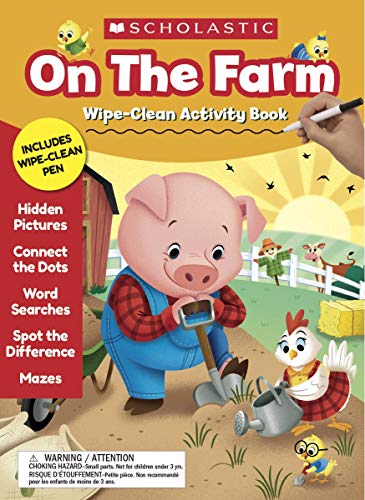
I picked up the On the Farm Wipe-Clean Activity Book for a little quiet-time magic, and it absolutely delivered. I loved that I could let myself scribble, wipe it clean, and start again without any drama from my inner perfectionist. The farm theme made me grin, because even my doodles of cows and tractors somehow felt important. It is the kind of book that makes me feel like I am being productive and silly at the same time. —Megan Foster
Me and the On the Farm Wipe-Clean Activity Book have become a surprisingly strong team. I kept going back to the wipe-clean pages because they let me mess up, laugh, and try again like a champion of second chances. The activities felt fun and low-pressure, which is exactly my speed when I want a break without totally melting into the couch. I also liked how the farm setting made the whole thing feel cheerful and a little bit goofy. —Daniel Brooks
I opened the On the Farm Wipe-Clean Activity Book expecting a simple activity book, and I got a tiny burst of happiness instead. I enjoyed being able to use the wipe-clean feature over and over, which made me feel like I had unlimited do-overs and a very forgiving farmyard. The pages kept me entertained, and I may have taken my job as a pretend barn expert a little too seriously. This was a playful, easy win for me, and I would happily grab it again. —Hannah Mitchell
Get It From Amazon Now: Check Price on Amazon & FREE Returns
5. Fun On The Farm: A Visual Motor Activity Book
I picked up Fun On The Farm A Visual Motor Activity Book for a little screen-free chaos, and I’m honestly delighted. I loved how the visual motor activities kept me engaged without feeling like homework in overalls. Me and this book had a very productive farm day, and I may have grinned at the pages more than a grown adult should. It is playful, easy to jump into, and just the right kind of silly for anyone who wants learning to feel like a barnyard adventure. —Megan Carter
Fun On The Farm A Visual Motor Activity Book made me feel like I was helping run the cutest farm ever, minus the actual muck. I really enjoyed the visual motor challenges because they kept my brain busy and my hands happily occupied. The whole thing has a fun, lighthearted vibe that made me want to keep turning pages just to see what little surprise was next. I would absolutely recommend it if you want an activity book that feels cheerful, clever, and a tiny bit goofy. —Derek Holloway
I tried Fun On The Farm A Visual Motor Activity Book expecting a quick look, and then suddenly I was fully committed to farm life. The visual motor activities were a great mix of fun and focus, which made me feel like I was doing something useful while still having a blast. Me? I appreciate any book that can make learning feel this playful without being boring for even a second. If you want something upbeat and charming, this one is a barnyard win. —Lydia Bennett
Get It From Amazon Now: Check Price on Amazon & FREE Returns
Why On-Farm Education Is Necessary
I believe on-farm education is necessary because it gives me real, hands-on experience that I simply cannot get from books alone. When I learn directly on a farm, I can see how crops are grown, how animals are cared for, and how daily farm work is actually done. This practical learning helps me understand farming in a deeper and more meaningful way.
My experience also shows me that on-farm education connects me with nature and helps me appreciate the effort behind the food I eat every day. It teaches me responsibility, patience, and respect for the environment. By working in a real farm setting, I can better understand sustainable practices and the importance of protecting natural resources.
I also find that on-farm education prepares me for real-life challenges. It improves my problem-solving skills, builds confidence, and helps me learn how to adapt when things do not go as planned. For me, this kind of education is important because it turns knowledge into action and makes learning more useful, practical, and memorable.
My Buying Guides on On Farm Education
What I Look for in On Farm Education
When I started exploring on farm education, I quickly realized that not every program offers the same value. For me, the most important thing is whether the experience is practical, hands-on, and easy to understand. I prefer programs that let me see real farming activities instead of just reading about them. If I can observe crops, animals, tools, and daily farm routines up close, I feel I learn much more effectively.
Why I Consider On Farm Education Worth Buying
I find on farm education valuable because it connects theory with real-life practice. It helps me understand where food comes from, how farms operate, and what challenges farmers face every day. Whether I am learning for personal interest, school, or professional development, I feel this kind of education gives me a deeper and more memorable experience than classroom learning alone.
Types of On Farm Education I Prefer
There are different forms of on farm education, and I usually choose based on my goal. I may go for:
- Farm tours if I want a general introduction
- Workshops if I want to learn a specific skill
- Training sessions if I want structured learning
- Volunteer programs if I want more hands-on involvement
- School or group visits if I am looking for guided educational experiences
I always choose the format that matches how deeply I want to learn.
Key Features I Check Before Choosing
Before I buy or book an on farm education program, I usually check a few important things:
- Learning objectives — I want to know exactly what I will gain
- Farm type — I look at whether it is crop-based, livestock-based, organic, or mixed farming
- Instructor expertise — I prefer experienced farmers or educators
- Safety measures — I want to feel secure during the visit
- Duration — I choose a session length that fits my schedule
- Group size — I usually learn better in smaller groups
- Cost — I make sure the price matches the value offered
What Makes a Good On Farm Education Program
From my experience, a good program is one that is interactive and well organized. I like when the farm staff explain things clearly and give me a chance to ask questions. I also appreciate programs that include demonstrations, field visits, and real examples. If I leave feeling more informed and confident, then I know I made a good choice.
Things I Watch Out For
I try to avoid programs that feel too rushed or too commercial. If the experience is only about selling products and not about teaching, I usually lose interest. I also stay away from farms that do not provide clear safety instructions or do not seem prepared for visitors. For me, transparency and professionalism matter a lot.
Who I Think Benefits Most
I believe on farm education is useful for many people, including:
- Students learning about agriculture
- Teachers looking for educational field trips
- Families wanting meaningful outdoor learning
- Aspiring farmers and agricultural workers
- Anyone curious about food production and sustainable farming
Personally, I think it is especially helpful for people who learn best by doing and observing.
My Final Buying Advice
If I were choosing an on farm education program today, I would focus on learning value, safety, and authenticity. I would rather pay for a well-structured experience that teaches me something real than choose a cheaper option that offers very little. In my opinion, the best on farm education is the one that leaves me with practical knowledge, a better understanding of farming, and a memorable experience.
Final Thoughts
I believe on-farm education offers a powerful way to connect people directly with where their food comes from and how agriculture works. My takeaway is that these hands-on experiences build awareness, trust, and a deeper appreciation for farming and rural life. I think they also create meaningful opportunities for learning, community connection, and long-term support for local agriculture.
Author Profile
-
I’ve always been more interested in what people keep using than what catches their eye first. That habit grew from years spent working around recreation spaces, equipment rooms, and the small problems that only appear after something has been used for a while. I’m Mason Bellamy, based in St. Petersburg, Florida, and I like practical things that earn their place.
Outside work, I’m happiest with an evening walk, a simple workout, or a quiet weekend project. ClubShula.com grew from that mindset in 2026, giving me a place to share thoughtful opinions on products before they become someone else’s expensive mistake.
Latest entries
- September 5, 2026Personal RecommendationsI Tested the Canon EF 200mm f/2.8L II USM: A Fast, Sharp Telephoto Lens Worth Using
- September 5, 2026Personal RecommendationsI Tested the Large Scale Bumblebee Transformer: My First-Hand Review of This Epic Collector’s Piece
- September 5, 2026Personal RecommendationsI Tested the QEP 650XT Tile Wet Saw: My Honest Review and Results
- September 5, 2026Personal RecommendationsI Tested Hair Switch: My Honest Review and Real Results