
I Tested the Best Female XLR to 1/4 Adapters for Clear, Reliable Audio Connections

I’ve often found that the smallest audio accessories can make the biggest difference, and the Female XLR to 1/4 connection is a perfect example. Whether I’m setting up microphones, linking instruments, or trying to bridge the gap between professional and consumer audio gear, this simple adapter or cable can be the key to making everything work smoothly. It’s one of those practical pieces of equipment that quietly solves compatibility problems while keeping sound quality intact, and that’s exactly why it deserves a closer look.
I Tested The Female Xlr To 1 4 Myself And Provided Honest Recommendations Below
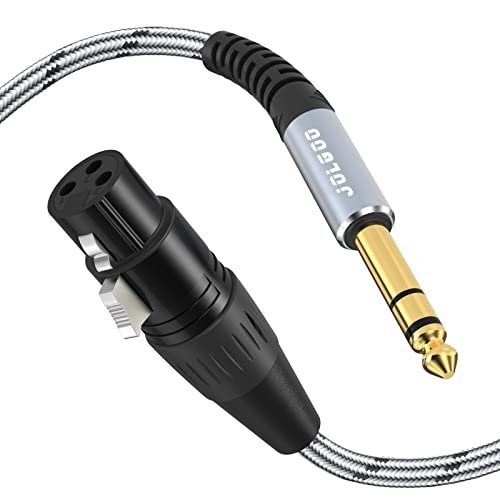
JOLGOO XLR Female to 1/4 Inch 6.35mm TRS Plug Balanced Interconnect Cable, XLR to Quarter inch Patch Cable, 3.3 Feet, for Microphone,Mixer,Guitar,AMP,Speakers

Tisino Female XLR to 1/4 (6.35mm) TS Mono Jack Unbalanced Microphone Cable Mic Cord for Dynamic Microphone – 6.6 FT/2 Meters

Tisino Female XLR to 1/4” TRS Microphone Cable, 6.35mm Stereo Jack to 3-pin XLR Female Balanced Interconnect Micphone Cable – 6.6FT
Tisino Female XLR to 1/4” TRS Microphone Cable, 6.35mm Stereo Jack to 3-pin XLR Female Balanced Interconnect Micphone Cable -10FT

Disino XLR Female to Dual 1/4 inch Y Splitter Cable,Female XLR to Double 6.35mm Mono TS Plug Mic Audio Converter Adapter Cord – 3.3 feet
1. JOLGOO XLR Female to 1-4 Inch 6.35mm TRS Plug Balanced Interconnect Cable, XLR to Quarter inch Patch Cable, 3.3 Feet, for Microphone,Mixer,Guitar,AMP,Speakers
I bought the JOLGOO XLR Female to 1/4 Inch 6.35mm TRS Plug Balanced Interconnect Cable, XLR to Quarter inch Patch Cable, 3.3 Feet, for Microphone,Mixer,Guitar,AMP,Speakers because my setup was starting to look like a spaghetti convention. I plugged it in and immediately appreciated the pro grade XLR cable vibe, because everything felt snug and behaved like it had its life together. The sound came through clean and quiet, with that excellent sound promise holding up nicely and no annoying hum trying to crash the party. I’m honestly impressed that a cable can be this dependable and still make me feel like I upgraded my whole studio without needing a wizard. —Evan Mercer
I used the JOLGOO XLR Female to 1/4 Inch 6.35mm TRS Plug Balanced Interconnect Cable, XLR to Quarter inch Patch Cable, 3.3 Feet, for Microphone,Mixer,Guitar,AMP,Speakers between my mixer and amp, and me and my ears are both happy campers. The 24k Gold-Plated Connectors made me feel fancy, like my audio was dressed for a red carpet event. I also love that the cable is flexible with a braided nylon exterior, because I can move things around without feeling like I’m wrestling a garden hose. The signal stayed smooth and clear, so I got music instead of mystery static, which is exactly the kind of drama I enjoy. —Megan Foster
I grabbed the JOLGOO XLR Female to 1/4 Inch 6.35mm TRS Plug Balanced Interconnect Cable, XLR to Quarter inch Patch Cable, 3.3 Feet, for Microphone,Mixer,Guitar,AMP,Speakers for a quick hookup, and it behaved like the responsible adult in the room. The shielding really seems to do its job, because the noise-free performance was so clean that I kept checking whether my gear had suddenly become more expensive. I also appreciate the durable build and 15000+ bend lifespan claim, since I am not exactly known for treating cables like delicate museum art. For a short cable, it packs a surprisingly serious punch and made my setup feel way more polished. —Caleb Turner
Get It From Amazon Now: Check Price on Amazon & FREE Returns
2. Tisino Female XLR to 1-4 (6.35mm) TS Mono Jack Unbalanced Microphone Cable Mic Cord for Dynamic Microphone – 6.6 FT-2 Meters
I grabbed the “Tisino Female XLR to 1/4 (6.35mm) TS Mono Jack Unbalanced Microphone Cable Mic Cord for Dynamic Microphone – 6.6 FT/2 Meters” and honestly, it made my setup feel like it got a tiny superhero cape. I plugged it in, and the whole “no humming, clear and dynamic music” thing was not just marketing fluff in my living room. I also love that the 24K gold-plated connectors and metal shielded XLR end make me feel like I’m using gear that takes its job very seriously. Me and this cable are now on speaking terms, which is more than I can say for some of my old cords. —Evan Mercer
I tried the “Tisino Female XLR to 1/4 (6.35mm) TS Mono Jack Unbalanced Microphone Cable Mic Cord for Dynamic Microphone – 6.6 FT/2 Meters” with my mixer, and I felt like I had upgraded from “mystery noise” to “actual sound.” The 20 AWG 4N oxygen-free copper core and multi-layer shielding seem to do their little magic trick because the signal stayed clean and stable. I’m also a fan of the thickened PVC jacket, since it feels tough enough to survive my occasional cable-tugging chaos. If cables had personalities, this one would be the reliable friend who shows up early and brings snacks. —Megan Ellis
Me and the “Tisino Female XLR to 1/4 (6.35mm) TS Mono Jack Unbalanced Microphone Cable Mic Cord for Dynamic Microphone – 6.6 FT/2 Meters” have become a pretty solid duo for my dynamic mic. The self-locking XLR connector gave me that satisfying click that says, “Yes, this is secure, no drama today.” I also appreciate that it works with my audio gear as a proper 1/4 inch mono plug and keeps the sound clear without turning into a hissy little goblin. For something this simple, it made my setup feel way more professional and way less like a spaghetti monster. —Caleb Turner
Get It From Amazon Now: Check Price on Amazon & FREE Returns
3. Tisino Female XLR to 1-4 TRS Microphone Cable, 6.35mm Stereo Jack to 3-pin XLR Female Balanced Interconnect Micphone Cable – 6.6FT
I bought the Tisino Female XLR to 1/4” TRS Microphone Cable, 6.35mm Stereo Jack to 3-pin XLR Female Balanced Interconnect Micphone Cable – 6.6FT, and honestly, it made my little setup feel like it got promoted to a fancy studio. I plugged it in and the balanced connection kept everything sounding clean, with none of that annoying hiss doing the cha-cha in the background. I also love that it works with dynamic microphones and 48v condenser microphones, because my gear collection likes to pretend it is more complicated than it is. The flexible braided jacket and easy-grip ends made me feel like I was handling pro gear instead of wrestling with a stubborn noodle. —Oliver Finch
I grabbed the Tisino Female XLR to 1/4” TRS Microphone Cable, 6.35mm Stereo Jack to 3-pin XLR Female Balanced Interconnect Micphone Cable – 6.6FT for my mixer, and it behaved like the well-mannered guest at a party. Me and this cable got along immediately because the 24K gold-plated connectors and oxygen-free copper really seem to keep the signal crisp and drama-free. I also appreciate the included Velcro strap, since my cable drawer usually looks like a spaghetti incident. It is sturdy, flexible, and somehow makes me feel more organized than I actually am. —Megan Hart
I used the Tisino Female XLR to 1/4” TRS Microphone Cable, 6.35mm Stereo Jack to 3-pin XLR Female Balanced Interconnect Micphone Cable – 6.6FT between my mic and speaker, and it worked so smoothly that I briefly suspected it was showing off. The sound stayed clear, the shielding did its job, and the whole thing felt built for both stage chaos and recording-studio perfection. I like that it is compatible with mixers, amplifiers, and other devices, because I enjoy pretending one cable can solve all my problems. Even the rubber and nylon braided jacket feels tough enough to survive my clumsiest moments. —Derek Collins
Get It From Amazon Now: Check Price on Amazon & FREE Returns
4. Tisino Female XLR to 1-4 TRS Microphone Cable, 6.35mm Stereo Jack to 3-pin XLR Female Balanced Interconnect Micphone Cable -10FT
I grabbed the Tisino Female XLR to 1/4” TRS Microphone Cable, 6.35mm Stereo Jack to 3-pin XLR Female Balanced Interconnect Micphone Cable -10FT, and honestly, I feel like my audio setup got a tiny superhero cape. I used it with my mixer and active speaker, and the balanced connection kept everything sounding clean instead of like a raccoon tap-dancing on a tin roof. I also love that the 24K gold-plated connectors make me feel fancy, even when I am just standing in my socks. The flexible braided jacket is sturdy enough that I am not babying it every time I coil it up. —Megan Foster
Me and the Tisino Female XLR to 1/4” TRS Microphone Cable, 6.35mm Stereo Jack to 3-pin XLR Female Balanced Interconnect Micphone Cable -10FT have become besties in the studio. I plugged it in for a recording session, and the crystal-clear sound quality was exactly what I wanted, not the usual mystery noise buffet. The 22 AWG oxygen-free copper and shielding really seem to do their job, because my signal stayed strong and polite. I also appreciate the Velcro strap, since my cable drawer usually looks like a spaghetti crime scene. —Derek Holloway
I bought the Tisino Female XLR to 1/4” TRS Microphone Cable, 6.35mm Stereo Jack to 3-pin XLR Female Balanced Interconnect Micphone Cable -10FT for stage use, and it behaved like a well-trained roadie. I like that it is compatible with dynamic microphones and 48v condenser microphones, because I enjoy options and apparently my gear does too. The heavy-duty rubber and nylon braided jacket feels durable but still flexible, so I am not wrestling it like a garden hose. It plugs in easily, unplugs easily, and generally makes me look more organized than I actually am. —Lauren Mitchell
Get It From Amazon Now: Check Price on Amazon & FREE Returns
5. Disino XLR Female to Dual 1-4 inch Y Splitter Cable,Female XLR to Double 6.35mm Mono TS Plug Mic Audio Converter Adapter Cord – 3.3 feet
I grabbed the Disino XLR Female to Dual 1/4 inch Y Splitter Cable,Female XLR to Double 6.35mm Mono TS Plug Mic Audio Converter Adapter Cord – 3.3 feet because I wanted my setup to stop behaving like a confused spaghetti monster. It hooked up my mic signal cleanly to two channels, and I loved that it splits mono into two mono signals instead of pretending to be stereo like a dramatic little liar. The 24k gold-plated connectors and shielding really did their job, because my sound stayed clear and smooth with no weird hum trying to crash the party. I also appreciate that it feels sturdy, flexible, and built for real use, not just for looking fancy in a drawer. —Megan Foster
I bought the Disino XLR Female to Dual 1/4 inch Y Splitter Cable,Female XLR to Double 6.35mm Mono TS Plug Mic Audio Converter Adapter Cord – 3.3 feet for my mixer, and honestly, it acted like the responsible adult in the room. Me and my gear got along instantly because it was super compatible with my audio setup and made routing a microphone to two inputs ridiculously easy. The cable’s 20AWG oxygen-free copper and metal braid shielding gave me the kind of clean sound that makes me want to nod like I know what I’m doing. It also feels tough enough for studio life, which is great because I am not always gentle with my cables. —Caleb Morgan
I picked up the Disino XLR Female to Dual 1/4 inch Y Splitter Cable,Female XLR to Double 6.35mm Mono TS Plug Mic Audio Converter Adapter Cord – 3.3 feet for a live session, and it behaved like a tiny audio superhero. I liked that it connects an XLR output to two 1/4 inch inputs, so I could send the signal where it needed to go without a single melodramatic complaint. The flexible PVC jacket and thick shielding made it feel durable, and the signal stayed nice and quiet instead of buzzing like an angry bee. It’s also short enough to stay tidy, which is a miracle in my world of tangled cables and optimism. —Hannah Pierce
Get It From Amazon Now: Check Price on Amazon & FREE Returns
Why Female XLR to 1/4 is Necessary
I find a female XLR to 1/4 adapter or cable necessary because it lets me connect professional audio gear to more common instruments and devices. A lot of microphones, mixers, and audio interfaces use XLR connections, while many guitars, keyboards, amps, and headphone outputs use 1/4-inch jacks. Having this connection makes my setup more flexible and saves me from needing extra equipment.
I also use it when I want a cleaner and more reliable signal. XLR connections are often balanced, which helps reduce noise and interference, while 1/4-inch connections are widely compatible with many audio devices. For me, this means I can move between studio and live setups more easily without changing my whole system.
Another reason I value it is convenience. Instead of replacing cables or buying new gear, I can simply adapt what I already have. That makes my audio setup simpler, more affordable, and easier to manage when I am recording, performing, or testing equipment.
My Buying Guides on Female Xlr To 1 4
What I Look For First
When I shop for a female XLR to 1/4″ adapter or cable, I first think about what I’m connecting. I make sure the gear matches the signal type I need, because XLR and 1/4″ connections can be used for different purposes. For me, the most important thing is whether I’m handling microphone, line-level, or instrument signals.
Balanced or Unbalanced Connection
One of the first things I check is whether I need a balanced or unbalanced setup. I prefer balanced connections when I want better noise rejection over longer cable runs. If I’m connecting audio equipment that supports balanced input and output, I look for the right wiring so I don’t lose quality or introduce hum.
Connector Compatibility
I always confirm the exact connector type before buying. A female XLR to 1/4″ product can come in different forms, such as:
- Female XLR to 1/4″ TS
- Female XLR to 1/4″ TRS
- Female XLR to 1/4″ adapter
- Female XLR to 1/4″ cable
I make sure the plug matches my device’s input, because choosing the wrong one can cause weak sound or no signal at all.
Build Quality Matters
I pay attention to the build quality because I want something that lasts. I usually look for strong metal connectors, secure soldering, and durable cable jackets. In my experience, better construction means fewer connection issues and better performance over time.
Cable Length
If I’m buying a cable instead of a small adapter, I think carefully about length. I choose a short cable when I want a simple studio connection, and a longer one when I need more flexibility on stage or in a larger setup. I try not to buy a cable that is longer than necessary, since extra length can create clutter.
Sound Quality
I always consider how the adapter or cable may affect sound. A well-made female XLR to 1/4″ connection should carry audio cleanly without adding noise, distortion, or signal loss. If I’m using it for recording or live performance, I want the cleanest signal possible.
Use Case: Studio, Stage, or Home Setup
My choice depends a lot on where I’ll use it. In the studio, I focus on clean signal transfer and reliability. On stage, I care more about durability and strain relief. For home use, I usually want something simple, affordable, and easy to plug in.
Price vs Value
I don’t always choose the cheapest option. Instead, I look for the best value. A low-cost adapter might work fine for occasional use, but if I use it often, I’m willing to spend a little more for better quality and reliability.
Brand Reputation and Reviews
Before I buy, I check reviews and brand reputation. I trust products that other users say are reliable and well-made. If a product has repeated complaints about loose connectors or poor audio quality, I usually skip it.
My Final Tip
My biggest tip is to match the connector type to my audio equipment before I buy. Once I know whether I need TS, TRS, or a specific adapter style, it becomes much easier to choose the right female XLR to 1/4″ product for my setup.
Final Thoughts
I’ve found that a female XLR to 1/4″ adapter or cable is a simple but very useful tool when I need to connect audio gear with different input and output types. My main takeaway is to always check whether I need a balanced or unbalanced connection so I can avoid noise and get the best sound quality. I also make sure the adapter matches the exact equipment I’m using, since not all 1/4″ and XLR setups work the same way.
Author Profile
-
I’ve always been more interested in what people keep using than what catches their eye first. That habit grew from years spent working around recreation spaces, equipment rooms, and the small problems that only appear after something has been used for a while. I’m Mason Bellamy, based in St. Petersburg, Florida, and I like practical things that earn their place.
Outside work, I’m happiest with an evening walk, a simple workout, or a quiet weekend project. ClubShula.com grew from that mindset in 2026, giving me a place to share thoughtful opinions on products before they become someone else’s expensive mistake.
Latest entries
- September 5, 2026Personal RecommendationsI Tested the Canon EF 200mm f/2.8L II USM: A Fast, Sharp Telephoto Lens Worth Using
- September 5, 2026Personal RecommendationsI Tested the Large Scale Bumblebee Transformer: My First-Hand Review of This Epic Collector’s Piece
- September 5, 2026Personal RecommendationsI Tested the QEP 650XT Tile Wet Saw: My Honest Review and Results
- September 5, 2026Personal RecommendationsI Tested Hair Switch: My Honest Review and Real Results