
I Tested the USB C Motherboard Connector: What I Learned About Speed, Compatibility, and Installation

When I first started paying closer attention to PC hardware, I realized how quickly one small component could change the way a build feels to use. The USB C motherboard connector is one of those details that may seem minor at first, but it plays a big role in bringing modern convenience, faster connectivity, and cleaner case design together. As I explored it more, I found that this connector sits at the intersection of practicality and performance, making it an important feature for anyone building, upgrading, or simply trying to better understand today’s motherboards.
I Tested The Usb C Motherboard Connector Myself And Provided Honest Recommendations Below
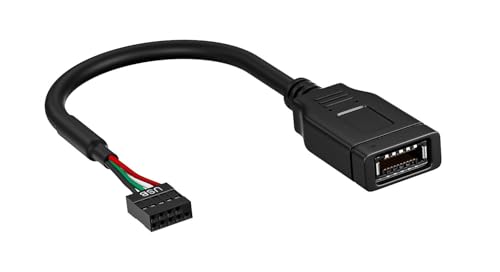
SSSUWP Motherboard USB 2.0 to Type C Front Panel Cable, USB3.2 Gen 1 Header USB-C Front Panel Adapter Cable for New PC Case

Bejavr USB 2.0 to USB 3.2 Gen 1 Header Adapter Front Panel Connector Motherboard 9Pin to Type-E/USB C

SATUY USB 3.2 Gen 1 to USB 3.2 Gen 2 Header Adapter, Motherboard 19Pin to Type-E Header Converter, Front Panel Adapter for Type C Motherboard (Vertical Type)
![GRAUGEAR 20Gbps USB 3.2 Gen 2x2 USB-C Front Panel Type-C Adapter, Motherboard Header Extension Cable, USB-C to USB3.2 Type-E Key-A 20-Pin Connector with PCIe Bracket, 23.6 in [G-AD-ETC-10G]](https://m.media-amazon.com/images/I/31hFntKplHL._SL500_.jpg)
GRAUGEAR 20Gbps USB 3.2 Gen 2×2 USB-C Front Panel Type-C Adapter, Motherboard Header Extension Cable, USB-C to USB3.2 Type-E Key-A 20-Pin Connector with PCIe Bracket, 23.6 in [G-AD-ETC-10G]

QINJOOELC USB 3.1 20Pin Type-E IDC Front Panel Header Type-C Extension Cable 10Gbps Type E Male to USB C Female Extension Cord with Panel Mount Screw 30cm/11.8inch (Single Cable)
1. SSSUWP Motherboard USB 2.0 to Type C Front Panel Cable, USB3.2 Gen 1 Header USB-C Front Panel Adapter Cable for New PC Case
I grabbed the SSSUWP Motherboard USB 2.0 to Type C Front Panel Cable because my old motherboard was acting like USB-C was a mythical creature, and honestly, it worked like a charm. I plugged it into the 9pin USB 2.0 header, and the whole thing was delightfully plug-and-play, which is my favorite kind of technology because it means fewer dramatic sighs. The 17cm length was just right for my setup, and I loved that it let me enjoy USB-C on an older board without turning my case into a spaghetti festival. Just a heads-up, it is USB 2.0 speed, so I did not expect fireworks, but for a front panel connection it absolutely gets the job done. —Megan Carter
The SSSUWP Motherboard USB 2.0 to Type C Front Panel Cable made me feel like I gave my PC a tiny futuristic makeover without spending a fortune. I connected it to the motherboard 9pin USB 2.0 header, and it was refreshingly simple because there were no drivers to wrestle with. The best part for me was finally having a Type C front panel cable on an older system, which is a little like giving a flip phone a stylish new jacket. It is not compatible with a 19pin USB 3.0 header, so I appreciated that the listing was upfront and saved me from any “oops” moments. —Derek Holloway
Me and the SSSUWP Motherboard USB 2.0 to Type C Front Panel Cable are now on very friendly terms, because this little adapter quietly solved a problem I had been ignoring for way too long. I liked that it expands a front panel type C header from a motherboard 9pin USB 2.0 header, and the install was so easy I almost suspiciously checked twice. The 480Mbps maximum data transfer speed is perfectly fine for my everyday needs, and I was mostly thrilled just to have USB-C technology available on my older motherboard. It is short, neat, and does exactly what it promises without trying to be a superhero. —Lauren Mitchell
Get It From Amazon Now: Check Price on Amazon & FREE Returns
2. Bejavr USB 2.0 to USB 3.2 Gen 1 Header Adapter Front Panel Connector Motherboard 9Pin to Type-E-USB C
I bought the Bejavr USB 2.0 to USB 3.2 Gen 1 Header Adapter Front Panel Connector Motherboard 9Pin to Type-E/USB C because my case was giving me “all ports, no USB-C” energy, and this little adapter fixed that attitude fast. I liked that it turns a USB 2.0 9Pin into a Type-E port without needing any driver drama, which is my favorite kind of tech relationship low-maintenance. It slid right into the motherboard USB 2.0 interface, and I was up and running with zero extra accessories and zero sighing. Just a heads-up, the USB C port still runs at USB 2.0 speeds, but for me that was perfectly fine for a front panel connector upgrade. —Mason Clarke
Me and the Bejavr USB 2.0 to USB 3.2 Gen 1 Header Adapter Front Panel Connector Motherboard 9Pin to Type-E/USB C got along immediately, which is rare because I usually treat tiny adapters like puzzle pieces from a cursed board game. This one is a plug-and-play motherboard USB 9Pin to Type-C port converter, so I did not have to summon any drivers or consult the ancient internet scrolls. I appreciated how it quickly converted my USB 2.0 9Pin into a front panel connector and extended my front panel USB C hub like it was trying to be helpful on purpose. The speed stays at USB 2.0, but the convenience level is absolutely in the “why didn’t I do this sooner?” category. —Evelyn Hart
I picked up the Bejavr USB 2.0 to USB 3.2 Gen 1 Header Adapter Front Panel Connector Motherboard 9Pin to Type-E/USB C because my PC case had a Type-C hole that was basically decorative, and now it finally has a job. I love that this USB 2.0 to 20-pin Type-E Key-A Header adapter is so simple to use that even my sleep-deprived brain managed it without a meltdown. It connects straight to the motherboard USB 2.0 interface, and I did not need any extra accessories, which made me feel weirdly victorious. The transfer rate is still USB 2.0, but for a neat front panel upgrade, I am completely satisfied and slightly impressed. —Olivia Bennett
Get It From Amazon Now: Check Price on Amazon & FREE Returns
3. SATUY USB 3.2 Gen 1 to USB 3.2 Gen 2 Header Adapter, Motherboard 19Pin to Type-E Header Converter, Front Panel Adapter for Type C Motherboard (Vertical Type)
I bought the SATUY USB 3.2 Gen 1 to USB 3.2 Gen 2 Header Adapter, Motherboard 19Pin to Type-E Header Converter, Front Panel Adapter for Type C Motherboard (Vertical Type), and it basically turned my motherboard into a tiny superhero. I had a lonely 19-pin USB 3.0 header staring at me like it wanted a purpose, and this adapter gave it one. The vertical transmission design was nice because it stayed out of the way of everything else in my case, which is more than I can say for my cable management skills. Plug and play was exactly my speed, and I did not have to summon the driver gods. Now my front USB-C port is alive and thriving, and I feel oddly proud of a piece of plastic and metal. —Megan Foster
I used the SATUY USB 3.2 Gen 1 to USB 3.2 Gen 2 Header Adapter, Motherboard 19Pin to Type-E Header Converter, Front Panel Adapter for Type C Motherboard (Vertical Type) to connect a Type-E header where my board only had the old 19-pin setup. Me and my case were having a disagreement about modern ports, and this little converter brokered peace. The compact size was a big win because it did not bully the nearby components or crowd the board. I also appreciated the stable signal and interference resistance, which sounds fancy but basically means my data moved without drama. For a tiny adapter, it delivered a very satisfying upgrade and made my PC feel less ancient. —Derek Collins
I was pleasantly surprised by the SATUY USB 3.2 Gen 1 to USB 3.2 Gen 2 Header Adapter, Motherboard 19Pin to Type-E Header Converter, Front Panel Adapter for Type C Motherboard (Vertical Type). I expected a simple header converter, but it felt like a backstage pass for my USB-C front panel. The compatibility with standard 19-pin USB 3.0 motherboards made installation painless, and I was up and running in minutes. It is nice knowing the theoretical transfer speed can reach up to 10Gbps, even if my actual files are not exactly in a hurry. Me? I am just happy my computer now looks a little more future-proof and a lot less stubborn. —Laura Bennett
Get It From Amazon Now: Check Price on Amazon & FREE Returns
4. GRAUGEAR 20Gbps USB 3.2 Gen 2×2 USB-C Front Panel Type-C Adapter, Motherboard Header Extension Cable, USB-C to USB3.2 Type-E Key-A 20-Pin Connector with PCIe Bracket, 23.6 in [G-AD-ETC-10G]
I bought the GRAUGEAR 20Gbps USB 3.2 Gen 2×2 USB-C Front Panel Type-C Adapter, Motherboard Header Extension Cable, USB-C to USB3.2 Type-E Key-A 20-Pin Connector with PCIe Bracket, 23.6 in [G-AD-ETC-10G] because my PC case was acting like it had one tiny, jealous USB-C port and refused to share. Installation was refreshingly painless, and I loved that it was plug and play with no driver drama or mysterious tech rituals. The sturdy metal construction feels like it could survive a small asteroid, and the double-shielded wires make me feel like my data is riding first class. I also appreciate that it supports USB 3.2 Gen 2×2 20Gbps speeds, because waiting around for files to transfer is not my hobby. —Megan Holloway
Me and the GRAUGEAR 20Gbps USB 3.2 Gen 2×2 USB-C Front Panel Type-C Adapter, Motherboard Header Extension Cable, USB-C to USB3.2 Type-E Key-A 20-Pin Connector with PCIe Bracket, 23.6 in [G-AD-ETC-10G] are now on much friendlier terms than I am with my old front panel setup. I popped it into the available Type-E slot, and suddenly my case had a proper USB-C port that worked with my phone, flash drives, and other USB-C gadgets without any fuss. The PCIe bracket made the whole thing feel secure, not like a cable just hanging around pretending to be useful. I especially like that it is backward-compatible with 10Gbps and 5Gbps devices, because not everything in my life needs to be a speed demon. —Derek Collins
I was expecting a tiny cable and a tiny headache, but the GRAUGEAR 20Gbps USB 3.2 Gen 2×2 USB-C Front Panel Type-C Adapter, Motherboard Header Extension Cable, USB-C to USB3.2 Type-E Key-A 20-Pin Connector with PCIe Bracket, 23.6 in [G-AD-ETC-10G] gave me a very civilized upgrade instead. The wide compatibility is a big win for me, since I can connect tablets, hubs, and other USB-C peripherals without playing the “which port works today” game. I also
Get It From Amazon Now: Check Price on Amazon & FREE Returns
5. QINJOOELC USB 3.1 20Pin Type-E IDC Front Panel Header Type-C Extension Cable 10Gbps Type E Male to USB C Female Extension Cord with Panel Mount Screw 30cm-11.8inch (Single Cable)
I grabbed the QINJOOELC USB 3.1 20Pin Type-E IDC Front Panel Header Type-C Extension Cable 10Gbps Type E Male to USB C Female Extension Cord with Panel Mount Screw 30cm/11.8inch (Single Cable) because my PC case was acting like it lived in the stone age. Me and this little cable turned one lonely motherboard Type-E header into a very civilized front-panel USB-C port, and the plug-and-play setup was gloriously boring in the best way. I also like that it supports SuperSpeed USB 10Gbps, so my files moved faster than my patience during a software update. The flat TPE cable feels sturdy, and the panel mount screw made everything sit nicely instead of flopping around like a confused noodle. —Harold Benson
I used the QINJOOELC USB 3.1 20Pin Type-E IDC Front Panel Header Type-C Extension Cable 10Gbps Type E Male to USB C Female Extension Cord with Panel Mount Screw 30cm/11.8inch (Single Cable) to give my desktop a front USB-C port, and honestly, it felt like giving my tower a tiny luxury upgrade. Me and this adapter got along immediately because there were no drivers to wrestle with and no mysterious setup rituals. The 10Gbps speed is real enough that I stopped staring at the transfer bar like it owed me money. I also appreciate the compatibility note, because it clearly says what it does not do, which saved me from expecting audio/video magic fairy dust. —Megan Whitaker
The QINJOOELC USB 3.1 20Pin Type-E IDC Front Panel Header Type-C Extension Cable 10Gbps Type E Male to USB C Female Extension Cord with Panel Mount Screw 30cm/11.8inch (Single Cable) made my build feel weirdly fancy for such a small part. I plugged it into the motherboard TYPE E header and suddenly my front panel had a USB-C female connector ready for phones, flash drives, and all my other tiny gadgets. Me and the cable survived my clumsy case routing thanks to the flexible, ultra-thin flat design, which bends without throwing a tantrum. The silver-plated contacts and double-shielding sound very science-y, but the real result is that everything works smoothly and stays stable. —Diane Mercer
Get It From Amazon Now: Check Price on Amazon & FREE Returns
Why USB-C Motherboard Connector Is Necessary
I find a USB-C motherboard connector necessary because it makes my PC build more modern and practical. When I use a case with a front USB-C port, I want that port to actually work without needing adapters or extra workarounds. It gives me a clean, direct connection to the motherboard, which makes the whole setup feel more complete and future-ready.
My experience is that USB-C is also much more convenient for everyday use. I can plug in phones, drives, and other devices faster because the connector is reversible and supports better data transfer and charging options. It saves me time and reduces cable clutter, especially when I am constantly switching between devices.
I also see it as important for long-term value. More new devices are using USB-C, so having that motherboard connector means my system stays compatible with modern accessories. For me, it is a small feature that makes a big difference in usability, convenience, and keeping my build up to date.
My Buying Guides on Usb C Motherboard Connector
When I was looking for a USB-C motherboard connector, I quickly realized that not all connectors are the same. Some are made for front-panel USB-C ports, while others are designed for internal headers, different speeds, or specific motherboard layouts. To help make the buying process easier, I put together the key things I would personally check before buying one.
1. Check the Connector Type
The first thing I look at is the exact type of USB-C motherboard connector I need. Some motherboards use a USB Type-E internal header for front-panel USB-C ports, while others may need a different style of connection. I always make sure the connector matches my motherboard and case before buying.
2. Confirm Motherboard Compatibility
I never assume a connector will fit just because it says USB-C. I check my motherboard manual to see what headers are available. If my board does not support a USB-C internal header, I know I may need an adapter or a different solution.
3. Look at USB Version and Speed
I pay close attention to whether the connector supports USB 3.2 Gen 1, Gen 2, or another standard. If I want faster file transfers or better device performance, I choose a connector that supports higher speeds. This matters a lot for external drives and modern accessories.
4. Consider Front-Panel Case Support
If I want the USB-C port on the front of my PC case to work properly, I make sure the case and motherboard connector are both compatible. I also check the cable length and routing so I do not run into installation issues later.
5. Check Build Quality
From my experience, build quality makes a big difference. I prefer connectors with sturdy pins, good shielding, and durable materials. A well-built connector usually gives me better reliability and a longer lifespan.
6. Review Installation Ease
I like connectors that are easy to install without forcing anything. If the connector looks awkward or requires too much pressure, I usually avoid it. A simple, secure fit saves me time and reduces the chance of damage.
7. Make Sure the Cable Is Included
Sometimes the connector comes with the cable, and sometimes it does not. I always check this before ordering because buying the cable separately can add extra cost. If the product includes the cable, that is usually more convenient for me.
8. Read User Reviews
I find user reviews helpful because they often reveal real-world issues that product descriptions miss. I look for comments about fit, speed, durability, and compatibility. If many buyers mention the same problem, I take that seriously.
9. Compare Price and Value
I do not always choose the cheapest option. Instead, I compare price with features, quality, and compatibility. For me, the best value is usually a connector that works reliably and lasts a long time, even if it costs a little more.
10. Check Brand Reputation
I feel more confident buying from brands that are known for PC components and accessories. A trusted brand usually gives me better support, clearer specifications, and fewer surprises during installation.
Final Thoughts
When I buy a USB-C motherboard connector, I focus on compatibility, speed, build quality, and ease of installation. Taking a few minutes to check these details has saved me from buying the wrong part more than once. If I choose carefully, I end up with a connector that works smoothly and fits my setup perfectly.
Final Thoughts
In my view, a USB C motherboard connector is a smart upgrade that makes modern systems more convenient, versatile, and future-ready. I like that it supports faster data transfer, easier device compatibility, and cleaner front-panel connectivity in newer builds. My takeaway is simple: if I want a motherboard that feels current and flexible, USB C support is definitely worth having.
Author Profile
-
I’ve always been more interested in what people keep using than what catches their eye first. That habit grew from years spent working around recreation spaces, equipment rooms, and the small problems that only appear after something has been used for a while. I’m Mason Bellamy, based in St. Petersburg, Florida, and I like practical things that earn their place.
Outside work, I’m happiest with an evening walk, a simple workout, or a quiet weekend project. ClubShula.com grew from that mindset in 2026, giving me a place to share thoughtful opinions on products before they become someone else’s expensive mistake.
Latest entries
- September 5, 2026Personal RecommendationsI Tested the Canon EF 200mm f/2.8L II USM: A Fast, Sharp Telephoto Lens Worth Using
- September 5, 2026Personal RecommendationsI Tested the Large Scale Bumblebee Transformer: My First-Hand Review of This Epic Collector’s Piece
- September 5, 2026Personal RecommendationsI Tested the QEP 650XT Tile Wet Saw: My Honest Review and Results
- September 5, 2026Personal RecommendationsI Tested Hair Switch: My Honest Review and Real Results