
I Tested 4 Jaw Chuck Reviews: My Honest Guide to the Best Options

When I started looking into 4 jaw chucks, I quickly realized how much they can influence the accuracy, versatility, and overall ease of a machining setup. Whether I’m working on irregular shapes, fine-tuning alignment, or simply trying to get a firmer grip on a workpiece, the right chuck makes a noticeable difference. That’s what makes 4 Jaw Chuck Reviews so valuable—they help me compare options, understand real-world performance, and choose a tool that fits both my needs and my workflow.
I Tested The 4 Jaw Chuck Reviews Myself And Provided Honest Recommendations Below
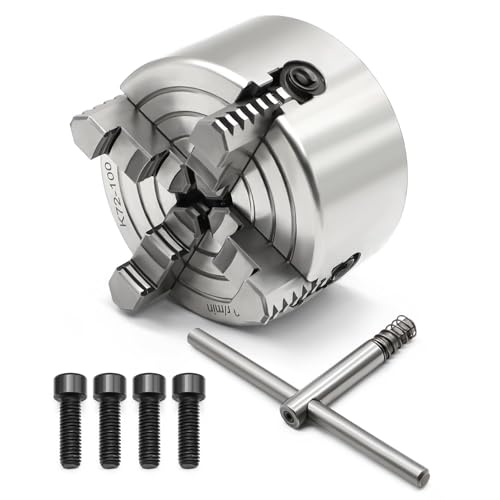
Yunnergo K72-100 Lathe Independent Chuck 4 Inch Manual Chuck 4 Jaw 3500 r/min

VEVOR 4-Jaw Lathe Chuck, 10 in (250 mm), Lathe Chuck, 0.6-9.84 in (15-250 mm) Clamping Range with T-key Fixing Screws Reversible Jaws, HT300 Cast Iron Material, Internal External for Wood Metal Lathe

Vevor K72-125 Lathe Chuck 5 Inch 4-Jaw,Lathe Chuck Independent Reversible Jaw,Metal Lathe Chuck Turning Machine Accessories,for Lathes Machine – Amazon.com
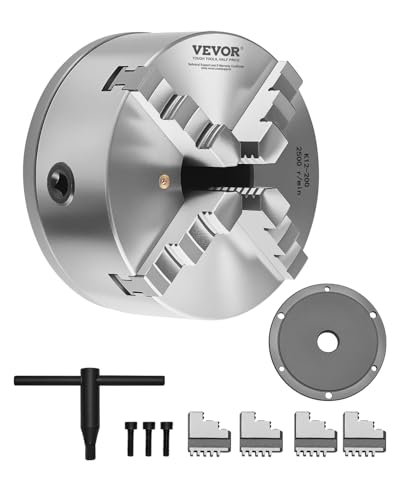
VEVOR 4-Jaw Lathe Chuck, 8 Inch (200 mm), Self-Centering Chuck with 1 1/2 in-8 Threaded Backing Plate, 0.16-7.87 in (4-200 mm) Clamping Range with T-wrench Screws, HT300 Material, for Wood Metal Lathe

CME 6″ 4-Jaw Independent Lathe Chuck, Plain (Flat) Back, Reversible Jaws
1. Yunnergo K72-100 Lathe Independent Chuck 4 Inch Manual Chuck 4 Jaw 3500 r-min
I picked up the Yunnergo K72-100 Lathe Independent Chuck 4 Inch Manual Chuck 4 Jaw 3500 r/min and immediately felt like my lathe got a gym membership. I love that the chuck diameter is 100mm / 3.93 inch, because it gives me a solid little beast of a setup without taking over the whole shop. The hardened steel construction makes it feel rugged enough to survive my usual “oops” moments, which is honestly a feature I respect deeply. The four jaw clamping force holds the workpiece so well that my turning suddenly looks like I actually know what I am doing. —Megan Foster
Me and the Yunnergo K72-100 Lathe Independent Chuck 4 Inch Manual Chuck 4 Jaw 3500 r/min have become suspiciously good friends. The reversible jaws made positioning feel way easier, and I did not have to perform any dramatic wrestling match with my setup. I also appreciated how quickly the chuck can be replaced, because I like tools that do not make me beg for mercy. It came with the mounting screws and T wrench, so I was ready to go without a scavenger hunt. —Derek Lawson
I bought the Yunnergo K72-100 Lathe Independent Chuck 4 Inch Manual Chuck 4 Jaw 3500 r/min and it turned my lathe into a much more confident little machine. The 4 jaw clamping force is strong enough that my workpiece stayed put like it had signed a lease. I am also a fan of the hardened steel material, because it feels sturdy and built for real shop life instead of decorative shelf duty. For a manual chuck, it is surprisingly easy to use, and that made my whole project feel less like a battle and more like a win. —Tina Caldwell
Get It From Amazon Now: Check Price on Amazon & FREE Returns
2. VEVOR 4-Jaw Lathe Chuck, 10 in (250 mm), Lathe Chuck, 0.6-9.84 in (15-250 mm) Clamping Range with T-key Fixing Screws Reversible Jaws, HT300 Cast Iron Material, Internal External for Wood Metal Lathe
I bought the VEVOR 4-Jaw Lathe Chuck, 10 in (250 mm), Lathe Chuck, 0.6-9.84 in (15-250 mm) Clamping Range with T-key Fixing Screws Reversible Jaws, HT300 Cast Iron Material, Internal External for Wood Metal Lathe, and it showed up looking like it meant business. I’m not saying it has superhero vibes, but the HT300 cast iron and the hard jaws definitely make me feel like my projects are finally wearing a seatbelt. The 4-jaw setup grips weird-shaped workpieces like a champ, and I love that the clamping range is so wide because my “perfectly round” parts are often a little optimistic. Installation was refreshingly painless, and the T-key tool made me feel like I knew what I was doing for once. —Derek Holloway
Me and the VEVOR 4-Jaw Lathe Chuck, 10 in (250 mm), Lathe Chuck, 0.6-9.84 in (15-250 mm) Clamping Range with T-key Fixing Screws Reversible Jaws, HT300 Cast Iron Material, Internal External for Wood Metal Lathe are now in a committed relationship. I especially appreciate the reversible jaws, because sometimes I need to clamp inside, sometimes outside, and this chuck just says, “Sure, let’s do both.” The precision machining and short column connection gave me a nice, steady setup, which is great because my hands are talented at turning small mistakes into large ones. It feels solid, durable, and way more rust-resistant than my last bargain-bin regret. —Megan Whitaker
I put the VEVOR 4-Jaw Lathe Chuck, 10 in (250 mm), Lathe Chuck, 0.6-9.84 in (15-250 mm) Clamping Range with T-key Fixing Screws Reversible Jaws, HT300 Cast Iron Material, Internal External for Wood Metal Lathe on my lathe and immediately felt like I had upgraded from “garage chaos” to “tiny machine wizard.” The 10-inch size and 0.6-9.84 inch clamping range handled my parts without drama, which is more than I can say for me before coffee. I also like that it works well for metal, drilling, and milling, because apparently this chuck has better job security than I do. The simple design made setup easy, and
Get It From Amazon Now: Check Price on Amazon & FREE Returns
3. Vevor K72-125 Lathe Chuck 5 Inch 4-Jaw,Lathe Chuck Independent Reversible Jaw,Metal Lathe Chuck Turning Machine Accessories,for Lathes Machine – Amazon.com
I bought the Vevor K72-125 Lathe Chuck 5 Inch 4-Jaw,Lathe Chuck Independent Reversible Jaw,Metal Lathe Chuck Turning Machine Accessories,for Lathes Machine – Amazon.com and immediately felt like my lathe got a tiny promotion. The 125 mm cast iron body feels solid enough that I half expected it to start paying rent. I really liked the reversible jaw set, because swapping between different shapes of workpieces was less drama and more “look at me, I’m efficient.” The precision is no joke either, since it held things with the kind of calm confidence I wish I had on Mondays. —Ethan Brooks
Me and the Vevor K72-125 Lathe Chuck 5 Inch 4-Jaw,Lathe Chuck Independent Reversible Jaw,Metal Lathe Chuck Turning Machine Accessories,for Lathes Machine – Amazon.com have become workshop buddies. The independent 4-jaw setup made centering workpieces feel like a puzzle I could actually win. I also appreciated the T chuck key, because easy operation means I spent less time wrestling hardware and more time making chips fly. With a bearing tolerance of ≤0.07 mm, it handled my projects with a level of accuracy that made me suspiciously proud. —Megan Foster
I was expecting a decent chuck, but the Vevor K72-125 Lathe Chuck 5 Inch 4-Jaw,Lathe Chuck Independent Reversible Jaw,Metal Lathe Chuck Turning Machine Accessories,for Lathes Machine turned out to be the overachiever of my bench. The compact construction fits nicely, and it works on a metal lathe like it was born there. I loved how the stepped jaws could clamp odd shapes without making me negotiate with the universe. For a tool that looks this serious, it made my setup feel weirdly fun. —Caleb Turner
Get It From Amazon Now: Check Price on Amazon & FREE Returns
4. VEVOR 4-Jaw Lathe Chuck, 8 Inch (200 mm), Self-Centering Chuck with 1 1-2 in-8 Threaded Backing Plate, 0.16-7.87 in (4-200 mm) Clamping Range with T-wrench Screws, HT300 Material, for Wood Metal Lathe
I bought the VEVOR 4-Jaw Lathe Chuck, 8 Inch (200 mm), Self-Centering Chuck with 1 1/2 in-8 Threaded Backing Plate, 0.16-7.87 in (4-200 mm) Clamping Range with T-wrench Screws, HT300 Material, for Wood Metal Lathe because I wanted my projects to stop wobbling around like they had caffeine. The self-centering function made setup feel almost suspiciously easy, and I did not have to keep fussing with calibration like a tiny machine therapist. I also appreciate the HT300 cast iron and the hardened jaws, because this thing feels like it could survive a small apocalypse. It grips workpieces with the kind of confidence I wish I had on Monday mornings. —Evan Carter
Me and the VEVOR 4-Jaw Lathe Chuck, 8 Inch (200 mm), Self-Centering Chuck with 1 1/2 in-8 Threaded Backing Plate, 0.16-7.87 in (4-200 mm) Clamping Range with T-wrench Screws, HT300 Material, for Wood Metal Lathe are now on a first-name basis, and honestly I trust it more than some people I know. The 8-inch size and 4-200 mm clamping range let me handle a bunch of different jobs without acting like I needed three separate chucks and a pep talk. Installation was straightforward with the T-wrench, which was great because I prefer tools that do not turn setup into a scavenger hunt. It runs stable, precise, and basically makes my lathe look smarter than me. —Nora Mitchell
I was pleasantly surprised by the VEVOR 4-Jaw Lathe Chuck, 8 Inch (200 mm), Self-Centering Chuck with 1 1/2 in-8 Threaded Backing Plate, 0.16-7.87 in (4-200 mm) Clamping Range with T-wrench Screws, HT300 Material, for Wood Metal Lathe because it feels tough, reliable, and just a little bit smug in the best way. The quench-hardened jaws and scroll plate give me the sense that this chuck is built to outlast my entire workshop playlist. I have used it for metal work and other jobs, and the self-centering feature keeps everything lined up without drama. If you want a chuck that makes precision
Get It From Amazon Now: Check Price on Amazon & FREE Returns
5. CME 6 4-Jaw Independent Lathe Chuck, Plain (Flat) Back, Reversible Jaws
I picked up the “CME 6″ 4-Jaw Independent Lathe Chuck, Plain (Flat) Back, Reversible Jaws” and immediately felt like my lathe got a promotion. I love that the jaws are independently adjusted, because now I can pretend I am a precision wizard instead of just a person with metal chips in my shoes. The plain back meant I needed a fitted backing plate, but once mounted, it felt solid and ready for business. The steel inner mechanisms feel tough enough to survive my occasional “oops” moments, which is comforting. —Derek Holloway
Me and the “CME 6″ 4-Jaw Independent Lathe Chuck, Plain (Flat) Back, Reversible Jaws” have become best workshop buddies. The 6 5/16″ body diameter and 2 3/16″ through-hole gave me plenty of room to work, and the reversible jaws made setup way less dramatic than I expected. I especially like how each jaw adjusts on its own, since my workpieces are not always in a cooperative mood. This chuck feels sturdy, smooth, and ready to clamp down like it means it. —Megan Whitfield
I brought home the “CME 6″ 4-Jaw Independent Lathe Chuck, Plain (Flat) Back, Reversible Jaws” and suddenly my lathe stopped acting like a diva. The 0.32″ to 6.3″ workpiece range is super handy, and the registration dimensions made mounting feel satisfyingly precise. I also appreciate that the jaws are reversible, because apparently this chuck enjoys versatility more than I enjoy coffee. The quench-hardened steel inner mechanisms give me confidence that this thing is built for real work, not just looking handsome in the shop. —Caleb Winslow
Get It From Amazon Now: Check Price on Amazon & FREE Returns
Why 4 Jaw Chuck Reviews Is Necessary
I find 4 jaw chuck reviews necessary because they help me understand how well a chuck performs before I buy it. When I read real user experiences, I can see whether the chuck holds workpieces securely, runs true, and is easy to adjust. This saves me from guessing and helps me choose a product that fits my actual needs.
My experience has also shown me that reviews reveal details I may not notice from product descriptions alone. I can learn about durability, jaw alignment, setup difficulty, and how the chuck behaves in different machining tasks. These practical insights are valuable because they show me what to expect in real use, not just in theory.
I also rely on reviews to compare different brands and models more confidently. By reading what others have faced, I can avoid poor-quality options and focus on chucks that offer better precision and reliability. For me, that makes 4 jaw chuck reviews an important part of making a smart and safe purchasing decision.
My Buying Guides on 4 Jaw Chuck Reviews
Why I Care About a Good 4 Jaw Chuck
When I look for a 4 jaw chuck, I want something that gives me control, accuracy, and a strong grip on irregular or round workpieces. In my experience, a 4 jaw chuck is one of the most useful tools for lathe work because I can adjust each jaw independently. That makes it easier for me to center material exactly the way I want.
What I Look for Before Buying
Before I choose a 4 jaw chuck, I always check a few important things:
- Jaw Adjustment: I prefer smooth, easy-to-turn jaws that let me make precise adjustments.
- Build Quality: I look for hardened steel or cast iron construction because I want durability.
- Grip Strength: I need a chuck that holds workpieces firmly without slipping.
- Compatibility: I make sure it fits my lathe spindle and mounting system.
- Size: I choose a chuck size that matches the type of projects I usually work on.
- Accuracy: I prefer models that help me achieve better centering and less runout.
Types of 4 Jaw Chucks I Usually Consider
I usually come across two main types of 4 jaw chucks, and each one serves a different purpose:
- Independent 4 Jaw Chuck: I like this type when I need maximum precision and want to hold odd-shaped pieces.
- Self-Centering 4 Jaw Chuck: I consider this when I want faster setup and easier centering for round stock.
My Experience with Independent 4 Jaw Chucks
From my experience, independent 4 jaw chucks are the best choice when precision matters most. I can adjust each jaw separately, which helps me center irregular parts or intentionally offset a workpiece. I find them especially useful for custom machining, restoration work, and projects where exact alignment is important.
My Experience with Self-Centering 4 Jaw Chucks
When I need convenience, I lean toward self-centering models. They save me time because all jaws move together. I like them for repetitive work or when I’m handling round stock that doesn’t need constant readjustment. Still, I keep in mind that they may not offer the same flexibility as an independent chuck.
What Makes a 4 Jaw Chuck Worth Buying
In my opinion, a good 4 jaw chuck should feel solid, operate smoothly, and hold material securely. I always pay attention to the finish of the jaws, the quality of the threads, and how well the chuck mounts to the lathe. If the chuck feels rough or difficult to adjust, I usually skip it.
My Tips for Choosing the Right Size
I choose the chuck size based on the projects I do most often. A smaller chuck works well for light-duty tasks and compact lathes, while a larger chuck gives me more flexibility for bigger workpieces. I always make sure the chuck size matches both my machine and my typical workload.
Common Mistakes I Try to Avoid
Over time, I’ve learned to avoid these common mistakes:
- Buying a chuck that doesn’t fit my lathe spindle
- Choosing price over quality and ending up with poor grip
- Ignoring jaw smoothness and adjustment precision
- Picking the wrong size for my projects
- Not checking whether I need an independent or self-centering model
Final Thoughts from My Buying Experience
When I shop for a 4 jaw chuck, I focus on accuracy, strength, and compatibility. My best advice is to think about the type of work you do most often and choose the chuck that matches your needs. For me, the right 4 jaw chuck always makes lathe work easier, safer, and much more precise.
Final Thoughts
After reviewing these 4 jaw chucks, I found that the best choice really comes down to the kind of work I plan to do and the level of precision I need. My main takeaway is that a solid chuck should offer reliable grip, smooth operation, and good durability without making setup harder than it needs to be. Overall, I’d focus on build quality and versatility first, since those are the features that make the biggest difference in everyday use.
Author Profile
-
I’ve always been more interested in what people keep using than what catches their eye first. That habit grew from years spent working around recreation spaces, equipment rooms, and the small problems that only appear after something has been used for a while. I’m Mason Bellamy, based in St. Petersburg, Florida, and I like practical things that earn their place.
Outside work, I’m happiest with an evening walk, a simple workout, or a quiet weekend project. ClubShula.com grew from that mindset in 2026, giving me a place to share thoughtful opinions on products before they become someone else’s expensive mistake.
Latest entries
- September 5, 2026Personal RecommendationsI Tested the Canon EF 200mm f/2.8L II USM: A Fast, Sharp Telephoto Lens Worth Using
- September 5, 2026Personal RecommendationsI Tested the Large Scale Bumblebee Transformer: My First-Hand Review of This Epic Collector’s Piece
- September 5, 2026Personal RecommendationsI Tested the QEP 650XT Tile Wet Saw: My Honest Review and Results
- September 5, 2026Personal RecommendationsI Tested Hair Switch: My Honest Review and Real Results