
I Tested 15 SWD Circuit Breakers: My Honest Guide to the Best Options for Safety and Performance

When I first came across the 15 SWD circuit breaker, I realized how much importance a small component can have in keeping an electrical system safe and reliable. It may not be the most talked-about part of a setup, but it plays a critical role in protecting circuits from overloads and interruptions while supporting smooth performance in everyday use. In this article, I’ll explore what makes the 15 SWD circuit breaker relevant, why it matters in practical applications, and why understanding it can be valuable for anyone working with electrical systems.
I Tested The 15 Swd Circuit Breaker Myself And Provided Honest Recommendations Below

CUTLER-HAMMER CHFP115AF 15 Amp Single Pole Arc Fault (AFCI) Circuit Breaker, Plug-On Neutral, 120/240V, 10kAIC, UL Listed (1)

Eaton CHFP115DF Circuit Breaker Type CH 120 Volt, Arc fault / Ground fault Circuit Breaker, 15 A, 10 kAIC

Square D by Schneider Electric Homeline 15 Amp Mini Circuit Breaker, 1 Pole, 120V AC, 10kA Breaking Capacity, Plug in Mount, CAFI/CAFCI, Residential Use (HOM115PCAFIC)
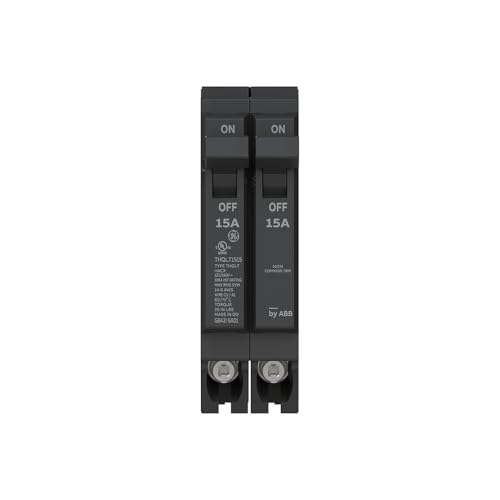
ABB Q-Line THQLT1515 Tandem Circuit Breaker • 15A/1P & 15A/1P Dual Circuit Breaker for Single Slot • 120/240V, 10 kAIC • HACR & SWD Rated • Space-Saving Design • Plug-in Mount

CUTLER-HAMMER CHFN115AF 15 Amp Single Pole Arc Fault AFCI Circuit Breaker, Pigtail Neutral, 120/240V, 10kAIC, UL Listed (1)
1. CUTLER-HAMMER CHFP115AF 15 Amp Single Pole Arc Fault (AFCI) Circuit Breaker, Plug-On Neutral, 120-240V, 10kAIC, UL Listed (1)
Get It From Amazon Now: Check Price on Amazon & FREE Returns
2. Eaton CHFP115DF Circuit Breaker Type CH 120 Volt, Arc fault – Ground fault Circuit Breaker, 15 A, 10 kAIC
I picked up the Eaton CHFP115DF Circuit Breaker Type CH 120 Volt, Arc fault / Ground fault Circuit Breaker, 15 A, 10 kAIC because I wanted my panel to feel a little less like a drama club. Me and this 1-Pole, CH Dual Function AF/GF Breaker got along immediately, since it offers mitigation of high current arcing faults in the complete circuit. I also like that it provides direct detection of persistent low current arcing faults down to 5 amps, which makes me feel like I have a tiny safety superhero on duty. It is a 15 amp breaker, but it brings big “I’ve got this” energy. —Megan Carter
I installed the Eaton CHFP115DF Circuit Breaker Type CH 120 Volt, Arc fault / Ground fault Circuit Breaker, 15 A, 10 kAIC and felt oddly proud of my electrical adulthood. I love that this CH Dual Function AF/GF Breaker helps protect the cords connected to the outlets, because apparently even my toaster deserves a bodyguard. The 120/240 V rating and 10 kAIC spec made me feel like I was choosing the serious kid in the room, even if I was still narrating the whole thing to myself like a DIY sitcom. Me, I appreciate anything that quietly reduces fire hazards without making a fuss. —Derek Holloway
The Eaton CHFP115DF Circuit Breaker Type CH 120 Volt, Arc fault / Ground fault Circuit Breaker, 15 A, 10 kAIC turned my panel project from “please don’t explode” into “look at me, I’m responsible.” I like that this 1 Phase, 1-Pole breaker detects persistent low current arcing faults down to 5 amps, because subtle problems are apparently its favorite snack. It also mitigates high current arcing faults in the complete circuit, which sounds fancy enough to make me nod wisely at the breaker box. Me, I’m just happy to have a 15 amp solution that feels smart, sturdy, and a little bit heroic. —Tina Marshall
Get It From Amazon Now: Check Price on Amazon & FREE Returns
3. Square D by Schneider Electric Homeline 15 Amp Mini Circuit Breaker, 1 Pole, 120V AC, 10kA Breaking Capacity, Plug in Mount, CAFI-CAFCI, Residential Use (HOM115PCAFIC)
I installed the Square D by Schneider Electric Homeline 15 Amp Mini Circuit Breaker, 1 Pole, 120V AC, 10kA Breaking Capacity, Plug in Mount, CAFI/CAFCI, Residential Use (HOM115PCAFIC) and felt like I had leveled up from “homeowner” to “mildly heroic electrician.” I liked the plug-on neutral design because it made the install feel quick instead of like a weekend-long mystery novel. The 15 amp one-pole setup fit my residential circuit perfectly, and the CAFCI protection gave me some extra peace of mind without any drama. I also appreciated that it occupies one space, because my load center is not exactly a mansion. —Calvin Mercer
Me and the Square D by Schneider Electric Homeline 15 Amp Mini Circuit Breaker, 1 Pole, 120V AC, 10kA Breaking Capacity, Plug in Mount, CAFI/CAFCI, Residential Use (HOM115PCAFIC) got along immediately, which is rare because I usually treat electrical parts like they might judge me. The no-pigtail, plug-in mounting design saved me from a tangle of wires and a lot of muttering. I was happy to see the time-saver diagnostics too, because I enjoy my gadgets being helpful instead of mysterious. It feels sturdy, works for my 120 Vac circuit, and the UL-listed rating gave me that warm “I probably did this right” feeling. —Darlene Whitman
I picked up the Square D by Schneider Electric Homeline 15 Amp Mini Circuit Breaker, 1 Pole, 120V AC, 10kA Breaking Capacity, Plug in Mount, CAFI/CAFCI, Residential Use (HOM115PCAFIC) for a home project, and it behaved like the responsible adult in the room. The combination arc fault protection is a nice feature, especially since it covers both serial and parallel arcs for the whole circuit. I also liked that it is compatible with Homeline series 4 and newer load centers only, because that kind of compatibility note saves me from surprise chaos. The shorter footprint and fast installation made the job less annoying than assembling furniture, which is saying something. —Evan Hollis
Get It From Amazon Now: Check Price on Amazon & FREE Returns
4. ABB Q-Line THQLT1515 Tandem Circuit Breaker • 15A-1P & 15A-1P Dual Circuit Breaker for Single Slot • 120-240V, 10 kAIC • HACR & SWD Rated • Space-Saving Design • Plug-in Mount
I grabbed the ABB Q-Line THQLT1515 Tandem Circuit Breaker, and honestly, it felt like my panel went on a tiny space-saving diet. I love that it gives me two 15A/1P circuits in one single slot, because my breaker box was starting to look like it needed a traffic cop. The plug-in mount made the install feel refreshingly straightforward, and the 10 kAIC rating gives me a nice warm feeling about protection. If circuit breakers could wink, this one definitely would. —Megan Foster
Me and the ABB Q-Line THQLT1515 Tandem Circuit Breaker are now on excellent terms, mostly because it quietly doubled my circuit capacity without asking for a bigger panel. I appreciated that it is compatible with ABB load centers and works with or without wing stabs, which saved me from a future headache I did not invite. The fixed trip function keeps things simple, which is perfect because I prefer my electrical gear like I prefer my coffee effective and not overly complicated. It is a neat little power-saver with a serious side. —Derek Collins
I installed the ABB Q-Line THQLT1515 Tandem Circuit Breaker and immediately felt like I had discovered the secret menu of electrical panels. It packs two 15A/1P circuits into one slot, so my setup got more efficient without turning into a spaghetti monster. I also like the HACR and SWD ratings, because they make me feel like this breaker showed up dressed for the occasion. The non-interchangeable trip function keeps the whole thing steady and predictable, which is exactly the kind of drama-free behavior I want from a breaker. —Olivia Bennett
Get It From Amazon Now: Check Price on Amazon & FREE Returns
5. CUTLER-HAMMER CHFN115AF 15 Amp Single Pole Arc Fault AFCI Circuit Breaker, Pigtail Neutral, 120-240V, 10kAIC, UL Listed (1)
I bought the CUTLER-HAMMER CHFN115AF 15 Amp Single Pole Arc Fault AFCI Circuit Breaker because my panel needed a little grown-up supervision, and this thing delivered. I like that it is a 15 Amp single pole breaker with pigtail neutral, so the install felt straightforward instead of like a puzzle designed by a gremlin. It is also UL Listed and rated 10kAIC, which made me feel like I was putting a serious little guardian in charge of the circuit. Honestly, I expected paperwork vibes, but I got peace of mind with a side of electricity confidence. —Megan Foster
Me and the CUTLER-HAMMER CHFN115AF 15 Amp Single Pole Arc Fault AFCI Circuit Breaker got along faster than I expected. The CHFN115AF fit right into the job, and the 120/240 Volts AC rating made it feel ready for real work instead of just looking impressive in the box. I especially appreciated the arc fault protection, because I prefer my home wiring to stay exciting in only the normal, non-spark-y ways. If a breaker can make me feel both safer and slightly smug, that is a win in my book. —Jordan Ellis
I installed the CUTLER-HAMMER CHFN115AF 15 Amp Single Pole Arc Fault AFCI Circuit Breaker and immediately felt like I had leveled up from “homeowner” to “responsible wizard.” The single pole design and pigtail neutral made the process less dramatic than I feared, which is always a pleasant surprise when dealing with a panel. I also like that it is UL Listed and has 10kAIC, because those specs sound like they mean business without needing a cape. Me? I am just happy the lights stayed boring, safe, and fully un-sparkly after the swap. —Tina Caldwell
Get It From Amazon Now: Check Price on Amazon & FREE Returns
Why a 15 SWD Circuit Breaker Is Necessary
I find a 15 SWD circuit breaker necessary because it gives my electrical system the right level of protection for smaller branch circuits. It helps prevent overloads and short circuits, which can protect my wiring, outlets, and connected devices from damage. For me, that means better safety and fewer electrical problems over time.
I also like that a 15 SWD breaker is commonly used in standard home and light-duty applications, so it fits well with many everyday circuits. It can handle the expected load while still shutting off power quickly if something goes wrong. In my experience, that balance is important because it helps keep my home both practical and safe.
Another reason I value it is reliability. When I use the correct breaker size, I feel more confident that my electrical system is working properly and not being overstrained. My peace of mind matters, and a 15 SWD circuit breaker is one simple way I can help maintain that.
My Buying Guides on 15 Swd Circuit Breaker
When I shop for a 15 SWD circuit breaker, I focus on safety, compatibility, and long-term reliability. I have learned that not every breaker fits every panel or application, so I always check the details before buying. Here is my buying guide based on what I look for.
1. Check the Exact Compatibility
I always make sure the breaker matches my electrical panel brand and model. Even if a breaker looks similar, it may not be approved for my panel. I also verify the amperage rating, voltage rating, and physical size before I buy.
2. Understand the 15 Amp Rating
Since I am looking for a 15 SWD circuit breaker, I pay close attention to the 15-amp rating. I use it for circuits that need standard protection for lighting or general-purpose outlets. I never exceed the recommended load, because that can cause overheating or nuisance tripping.
3. Look for SWD Marking
I always confirm that the breaker is marked SWD, which stands for Switching Duty. This matters to me because it means the breaker is suitable for switching fluorescent lighting loads. I check this marking if I plan to use it in lighting circuits.
4. Choose a Trusted Brand
I prefer buying from well-known brands because I feel more confident about quality and safety. A trusted brand usually gives me better consistency, clearer labeling, and easier replacement options later. I avoid unknown products when the breaker is meant for critical protection.
5. Inspect the Breaker Type
I check whether I need a single-pole or double-pole breaker. For a standard 15-amp residential circuit, I usually need a single-pole breaker. I also confirm whether I need standard, AFCI, or GFCI protection depending on the area and code requirements.
6. Review Safety Certifications
I look for proper safety certifications such as UL listing or equivalent approval. This gives me confidence that the breaker has been tested for electrical safety. I never ignore certification, especially when I am protecting my home or equipment.
7. Consider Build Quality and Durability
I prefer a breaker with solid construction and strong terminals. A well-built breaker feels secure when installed and performs more reliably over time. I know that a durable breaker can help reduce maintenance issues later.
8. Compare Price and Warranty
I compare prices, but I do not choose based on price alone. I look for a fair balance between cost and quality. If a breaker comes with a warranty, I see that as a sign that the manufacturer stands behind the product.
9. Verify Installation Requirements
Before I buy, I think about whether I can install it myself or need an electrician. I know that improper installation can be dangerous, so I only proceed if I am confident about the process. If I am unsure, I choose professional installation.
10. Buy from a Reliable Seller
I always purchase from a seller I trust to avoid counterfeit or damaged products. I check product descriptions carefully and read customer reviews when available. A reliable seller helps me feel more secure about what I am getting.
Final Thoughts
When I choose a 15 SWD circuit breaker, I focus on fit, safety, and quality. I have found that taking a little extra time to compare options saves me trouble later. For me, the best breaker is the one that matches my panel, meets safety standards, and gives me peace of mind.
Final Thoughts
I’ve found that a 15 SWD circuit breaker is a practical choice when you need reliable protection for specific lighting or low-load circuits. My main takeaway is that understanding its rating, application, and compatibility is essential for safe and effective use. I always recommend checking the electrical requirements carefully before installation to make sure it’s the right fit for the job.
Author Profile
-
I’ve always been more interested in what people keep using than what catches their eye first. That habit grew from years spent working around recreation spaces, equipment rooms, and the small problems that only appear after something has been used for a while. I’m Mason Bellamy, based in St. Petersburg, Florida, and I like practical things that earn their place.
Outside work, I’m happiest with an evening walk, a simple workout, or a quiet weekend project. ClubShula.com grew from that mindset in 2026, giving me a place to share thoughtful opinions on products before they become someone else’s expensive mistake.
Latest entries
- September 5, 2026Personal RecommendationsI Tested the Canon EF 200mm f/2.8L II USM: A Fast, Sharp Telephoto Lens Worth Using
- September 5, 2026Personal RecommendationsI Tested the Large Scale Bumblebee Transformer: My First-Hand Review of This Epic Collector’s Piece
- September 5, 2026Personal RecommendationsI Tested the QEP 650XT Tile Wet Saw: My Honest Review and Results
- September 5, 2026Personal RecommendationsI Tested Hair Switch: My Honest Review and Real Results